File 01 · World generation
Planetary terrain
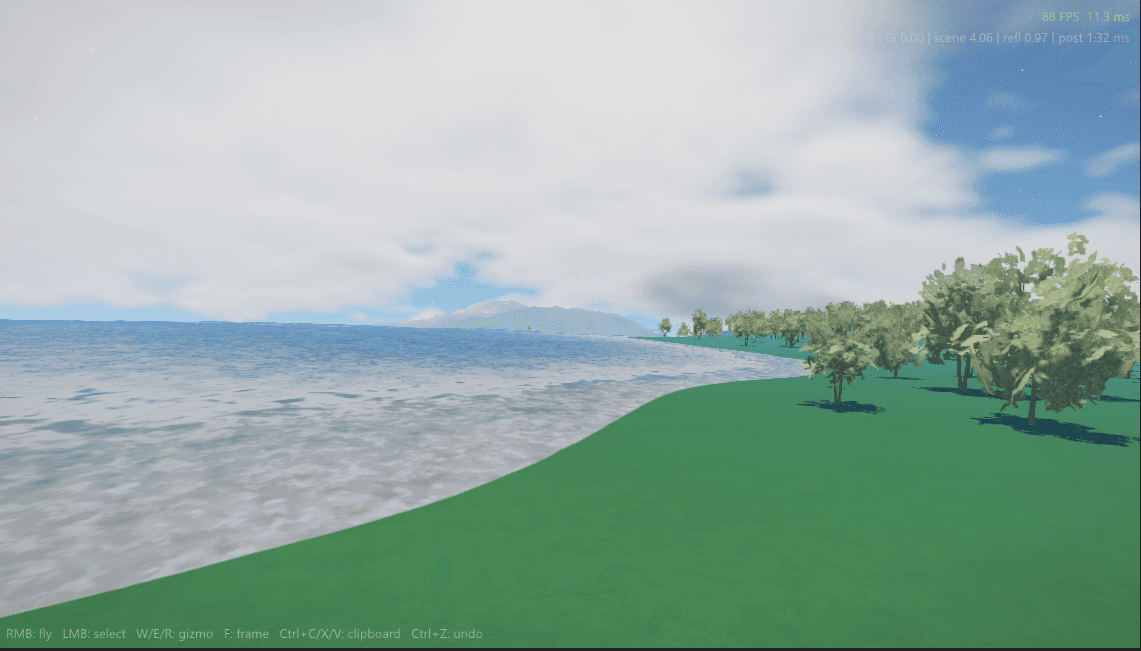
Why REACT simulates 140 million years of geology instead of layering noise functions, and how the result is rendered from orbit down to footstep scale.
11 min 4 figuresRead
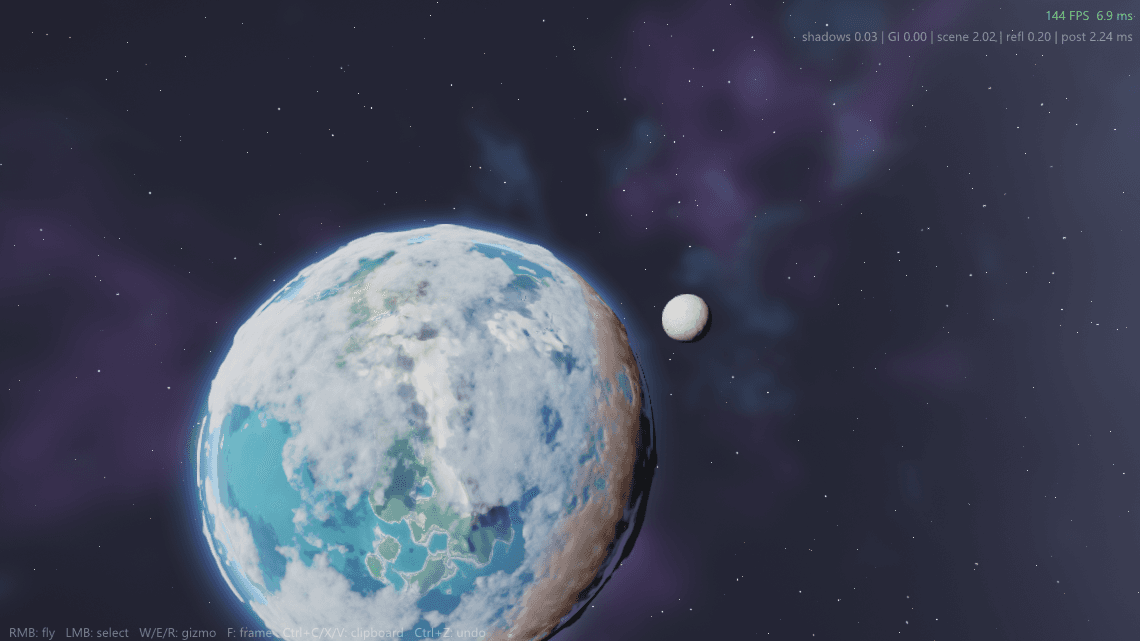
Rendered in REACT
Documentation
every system, on the record
Each article takes one engine system and explains it properly: the physics it approximates, the algorithm that approximates it, and numbers measured in engine. If a claim has a graph, the graph came from the profiler — and the charts draw themselves from the same formulas the renderer runs.
articles
figures
live demos
source papers
File 01 · World generation
Why REACT simulates 140 million years of geology instead of layering noise functions, and how the result is rendered from orbit down to footstep scale.
Rendered in REACT
File 02 · Rendering
Rayleigh and Mie scattering from first principles, and the precomputed lookup tables that evaluate them in under a millisecond per frame.
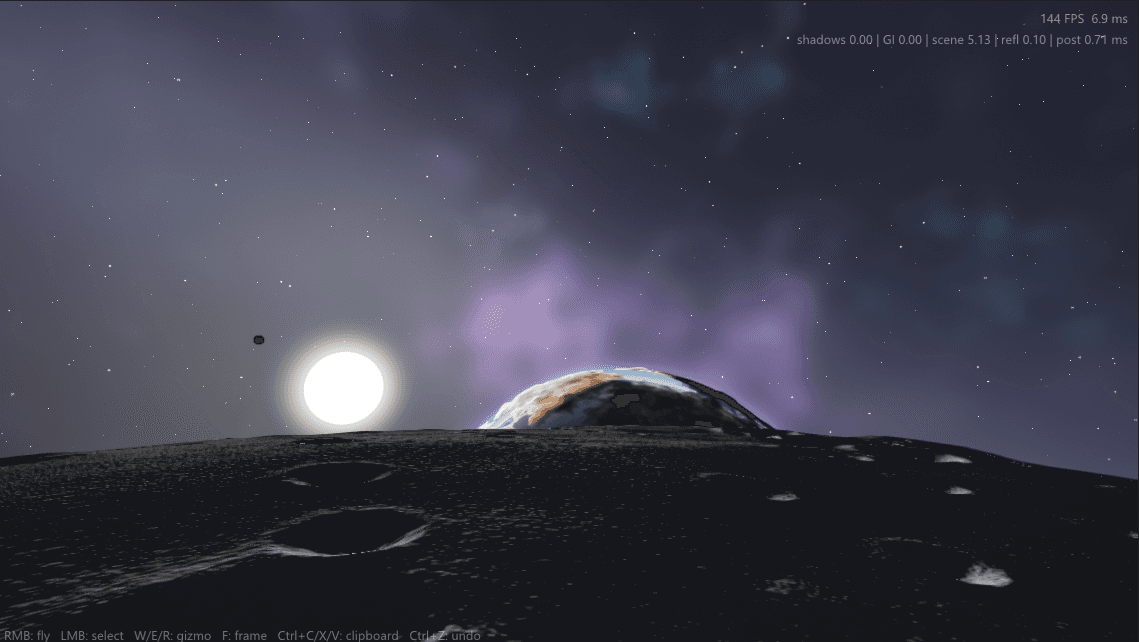
Rendered in REACT
File 03 · Rendering
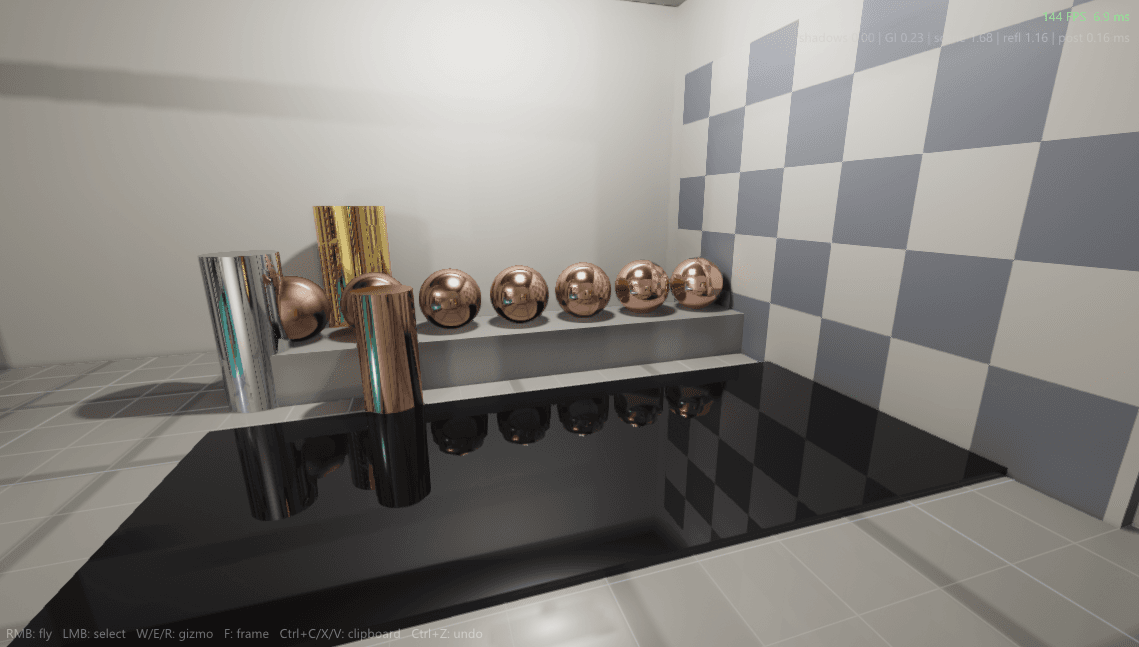
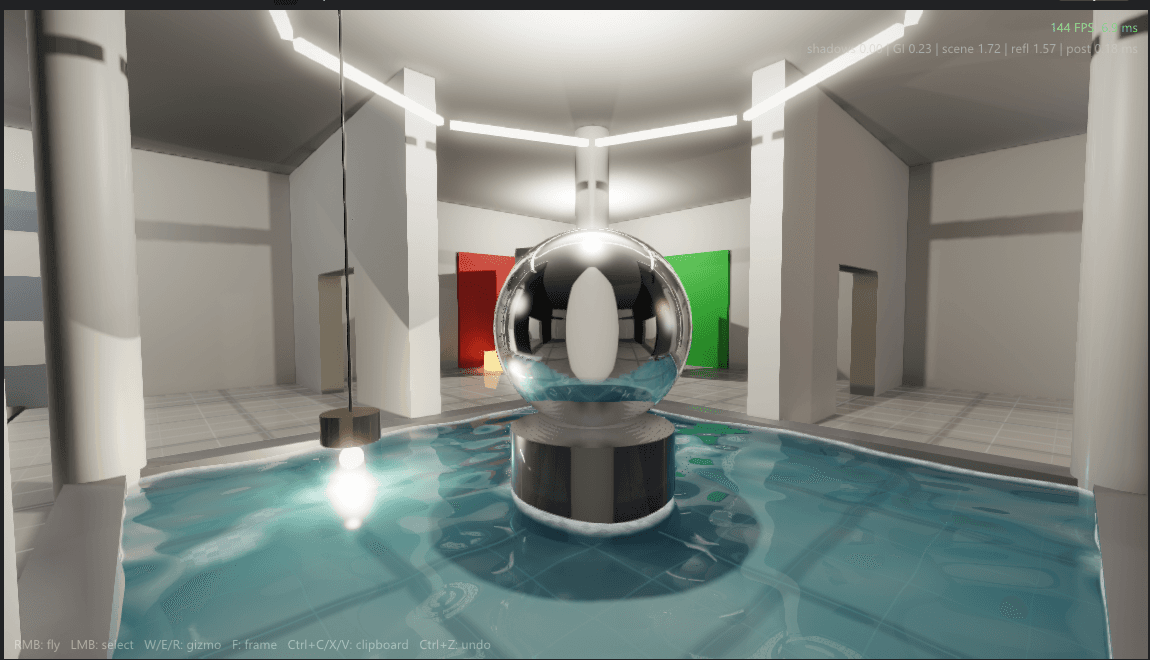
How voxel cone tracing turns every lit surface into a light source, why neon signs actually illuminate rooms, and what it costs per frame. With a drag-the-sun room you can light yourself.
Rendered in REACT
Bibliography
REACT does not invent its physics. Every major system is an implementation of peer-reviewed work, and this is the actual reading list it was built from. The articles above explain how each paper became running code.
E. Bruneton & F. Neyret, Precomputed Atmospheric Scattering (EGSR 2008)
→the entire sky LUT pipeline
A. Schneider & N. Vos, The Real-Time Volumetric Cloudscapes of Horizon Zero Dawn (SIGGRAPH 2015), and the Nubis follow-ups
→the cloud raymarcher and weather model
S. Worley, A Cellular Texture Basis Function (SIGGRAPH 1996)
→the noise the clouds are carved from
K. Mitchell, Volumetric Light Scattering as a Post-Process (GPU Gems 3)
→sun shafts through clouds and canopy
J. Tessendorf, Simulating Ocean Water (2001)
→wave spectra, dispersion, FFT synthesis and choppy displacement
M. Finch, Effective Water Simulation from Physical Models (GPU Gems 1)
→shoreline and shallow-water wave behavior
C. Cox & W. Munk, Measurement of the Roughness of the Sea Surface from Sun Glitter (1954)
→slope statistics behind the sun glitter
N. Jerlov, Marine Optics
→per-wavelength seawater extinction coefficients
McCowan's depth-limited breaking criterion (1894)
→where surf breaks: wave height near 0.78 of depth
E. Monahan & I. O'Muircheartaigh, Optimal Power-Law Description of Oceanic Whitecap Coverage (1980)
→whitecap coverage as a function of wind speed
I. Langmuir, Surface Motion of Water Induced by Wind (1938)
→the wind-aligned foam streaks on rough seas
G. Cordonnier et al., Large Scale Terrain Generation from Tectonic Uplift and Fluvial Erosion (2016)
→the tectonics-plus-erosion generation pipeline
J. Braun & S. Willett, A Very Efficient O(n) Implicit and Parallel Method to Solve the Stream Power Equation (2013)
→the erosion solver
P. T. Harris et al., Geomorphology of the Oceans (2014)
→shelf, slope, abyssal plain, ridge and trench proportions for the sea floor
C. Crassin et al., Interactive Indirect Illumination Using Voxel Cone Tracing (2011)
→the real-time GI system
M. Mikkelsen, Bump Mapping Unparametrized Surfaces on the GPU (2010)
→normals everywhere, with no tangent baking